
BRICS finance ministers and central bank governors have called for increased representation of emerging-market and developing economies in the IMF and World Bank, while also criticising unilateral tariffs and trade measures, as the expanded bloc aims to bolster financial cooperation amidst global fragmentation.

India and China are in what experts call 'a cooperation-versus-competition situation'.

From his first summit appearance in Durban in 2013 to the bloc's landmark expansion and renewed diplomacy in recent years, Xi Jinping's speeches and initiatives have reflected China's evolving priorities within BRICS.

'Eastern Ladakh set the relationship back by about 10 steps. So far, especially since Galwan, we may have taken just 4 steps forward.'

This article details the quarter-century journey of BRICS, from its inception as an economic acronym by a Goldman Sachs economist to its current status as an expanded eleven-member international bloc. It highlights its growth, key historical moments, and the significance of its upcoming summit, particularly with Iran's renewed importance in discussions.

In recent years, China and Russia have pushed for de-dollarisation within BRICS, which India has resisted. One reason is that India does not want to hurt its relationship with the United States, and another is the fear of China controlling trade because the renminbi is considered the strongest currency in the bloc today.

Haryana Chief Minister Nayab Singh Saini met with a World Bank delegation to discuss advancing Artificial Intelligence, digital governance, and skill development in the state. The discussions focused on leveraging technology to enhance citizen services, with plans to showcase Haryana's AI Sandbox globally and develop a dedicated AI model for the state.

Chinese President Xi Jinping addressed the BRICS summit, urging the bloc to play a significant role in achieving peace and tranquillity in West Asia and the Gulf region. He highlighted BRICS' growth over two decades, its efforts in tackling global challenges, and its steadfastness in safeguarding the interests of the Global South. Xi called for opposing the Cold War mentality, strengthening multilateralism, and promoting cooperation in emerging domains like AI, as China prepares to chair the next summit.

A new barrier lake has formed near the source of Nepal's Bhote Koshi River, with Chinese authorities warning of a potential breach. This poses a fresh flood risk to downstream areas in Nepal, prompting warnings for residents and calls for diplomatic consultations to manage cross-border glacier risks.
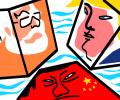
The challenge for India lies in navigating complex landscape to its best advantage. The BRICS Summit will test its navigation skills, asserts former foreign secretary Shyam Saran.

Jio Platforms (JPL) is preparing a capex-light strategy to commercially launch 6G services in the early 2030s through software upgrades, rather than fresh infrastructure investments, according to Akash Ambani, managing director of JPL.

IT Minister Ashwini Vaishnaw announced that the Indian government will release a consultation paper on AI regulations within a month. This framework will address critical aspects like AI safety, deepfakes, and a human-first approach, emphasising the industry's primary responsibility in ensuring safe AI deployment. The move comes amidst growing global concerns over AI risks and the need for robust safeguards.

For India, the goal is not simply to host another grand diplomatic gathering. It is to prove that a diverse coalition of emerging powers can still deliver.
Digital services major Jio Platforms is anticipated to list on the stock exchange by the end of October, with an estimated enterprise valuation of USD 143-146 billion, making it India's largest public offer at around USD 3.8 billion.

'PowerBank-50 is now space proven, made in India, and ready for every satellite builder in the world.'

Russian President Vladimir Putin has proposed a new investment platform, based on the New Development Bank (NDB), to fund projects in trade, infrastructure, logistics, and technology across BRICS nations, emphasising that the grouping's expanding economic cooperation is not 'against anyone' but aims to advance members' national interests.

A high-level committee, including representatives from banks and payment associations, is set to decide on Merchant Discount Rate (MDR) for UPI transactions exceeding Rs 2,000 to merchants. While person-to-person and person-to-merchant transactions up to Rs 2,000 remain free, the move follows a recent amendment to the Payment and Settlement Systems Act, sparking debate and clarification from the Finance Minister that only certain high-value merchant transactions might incur charges.

The BRICS summit in New Delhi brings together leaders from major emerging economies to address global challenges like trade disputes, geopolitical upheavals, and the economic impact of conflicts in Ukraine and West Asia. India, as chair, aims to position BRICS as an economic growth engine, focusing on the Global South's food, energy, and supply chain security. The summit also highlights the grouping's expansion and its growing influence in global governance.

Gwadar is viewed as a critical pearl in China's maritime strategy as it would give a permanent logistical footprint near an important choke point - the Strait of Hormuz and the oil rich Persian Gulf, explains Commodore Venugopal Menon (retd).

Industry experts advocate for India to develop its own artificial intelligence (AI) safety framework, distinct from US or EU models, to address unique challenges like deepfakes and cyberattacks. They call for a comprehensive commitment involving all stakeholders and a hybrid regulatory approach combining voluntary and binding measures, as the Indian government also considers new AI regulations.

Nepal's devastating flash floods have claimed 1,127 lives, with thousands still missing a week after the disaster. Rescuers are intensifying efforts to find survivors and recover bodies across affected regions, while police work to identify victims and relocate families from high-risk areas.

Prime Minister Narendra Modi has called upon India's youth to dream big, assuring them of government support and resources, including a Rs 1 lakh crore Innovation Fund, to bolster the country's burgeoning startup ecosystem and drive its journey towards becoming a developed nation.

US President Donald Trump is expected to sign the Lindsey O. Graham Sanctioning Russia and Iran Act of 2026 later on Friday (local time). A White House official confirmed the development to ANI without revealing further details.
The question for the next 20 years is not whether India can become a $5 trillion or $10 trillion economy. Those are attractive targets, but the real question is whether India can create enough productive jobs, educate its children properly, make its cities liveable, and give hundreds of millions of people a substantially better life, asserts Ramesh Menon.

Ahmedabad Cyber Crime Branch has uncovered a Rs 1.5 crore WhatsApp fraud, leading to the arrest of two key SIM and OTP suppliers in West Bengal. The investigation revealed a sophisticated international cybercrime network spanning China, Pakistan, India, and Hong Kong, operating a "boss scam" and utilizing a "Cybercrime as a Service" model. Police recovered a significant portion of the defrauded amount and secured thousands of devices.
India is making a significant push to establish itself as a global semiconductor manufacturing hub, driven by strategic investments and policy support. The upcoming SEMICON India 2026 event will showcase the country's advancements and ambitions in this critical industry, which underpins virtually all modern electronic devices and has faced global supply chain vulnerabilities.

BRICS members have expressed 'serious concerns' over the unilateral imposition of trade and finance-related measures, including higher tariffs and non-tariff barriers, stating these actions distort trade and are inconsistent with WTO rules. The grouping also highlighted elevated risks to the global economic outlook due to geopolitical tensions, trade fragmentation, and protectionism.
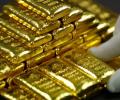
Gold and silver prices are anticipated to maintain a positive trajectory in the coming week, with market volatility expected to remain high due to ongoing developments in West Asia and upcoming global economic data, particularly the Federal Reserve's FOMC meeting minutes.

A report by Scholars at Risk, 'Free to Think 2026', states that academic freedom in India is "severely restricted" due to increasing government influence over higher education, university governance, and curbs on student expression. India is listed among six countries in this category, with its Academic Freedom Index score sharply declining. The report cites instances of faculty dismissals, event cancellations, and pressure on student protests, highlighting the alleged use of the UGC as a vehicle for state influence.
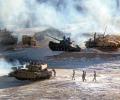
While tensions have eased at several friction points and mechanisms for managing the boundary have been reactivated, underlying differences persist. Disputes over naming practices in Arunachal Pradesh, continued infrastructure development on both sides, and unresolved questions regarding patrolling rights indicate that the structural gap remains, notes Dr Kumar.

As the world's most populous country, India's economy looks large in the aggregate even as its average incomes stay modest.

The devastating flash floods wreaked havoc across Nepal, with the ministry of external affairs on Thursday stating that 84 Indian nationals have been rescued while 290 remain uncontactable as the Himalayan nation stepped up search, rescue and relief operations following the disaster that has claimed more than 390 lives.

'... to see that young people are gainfully employed. After that, it will become very difficult as we will start ageing much more rapidly.' 'We have a huge proportion of Gen Z. After 2030, every year, we will start seeing a gradual shift towards a slightly older society.'

India expects to see the bank established as soon as possible.
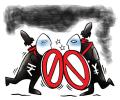
India and China have mostly set aside their bilateral differences in order to champion the cause of developing countries at the World Trade Organisation (WTO). That seems to be changing. During the latest round of China's trade policy review, India questioned its northern neighbour's claim that it was a developing country, since, going by the World Bank's definition, its per capita income belongs to that of an upper middle income country. "As per the per capita income level, the Chinese economy belongs to 'upper-middle income'. "How can China still claim to be a developing country? "What are the indicators which China is using to claim such a status?" India asked.

US President Donald Trump will visit China from May 13 to 15 at the invitation of President Xi Jinping. The visit occurs amidst global tensions, including the war in West Asia and trade disputes between the US and China. Discussions are expected to cover China-US relations, world peace, and economic issues.

India is closely monitoring Sri Lanka's decision to offer foreign investors control of an airport near the China-controlled Hambantota port, as it could present a rare opening for Indian firms seeking strategic footholds in the Indian Ocean.
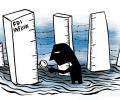
India has significantly improved its position as a global foreign direct investment (FDI) destination, climbing two places to 11th in 2025, with inflows surging by nearly 44 per cent to $38.89 billion, according to the United Nations Conference on Trade and Development (Unctad) World Investment Report 2026.

Is Bhutan merely experimenting with digital finance -- or is the Himalayan kingdom punching far above its weight, quietly playing one of the most sophisticated strategic games in Asia today? asks Varun Arya.

South Africa's Deputy International Relations and Cooperation Minister Marius Fransman said this would give a major boost to some of the development needs of these countries.
